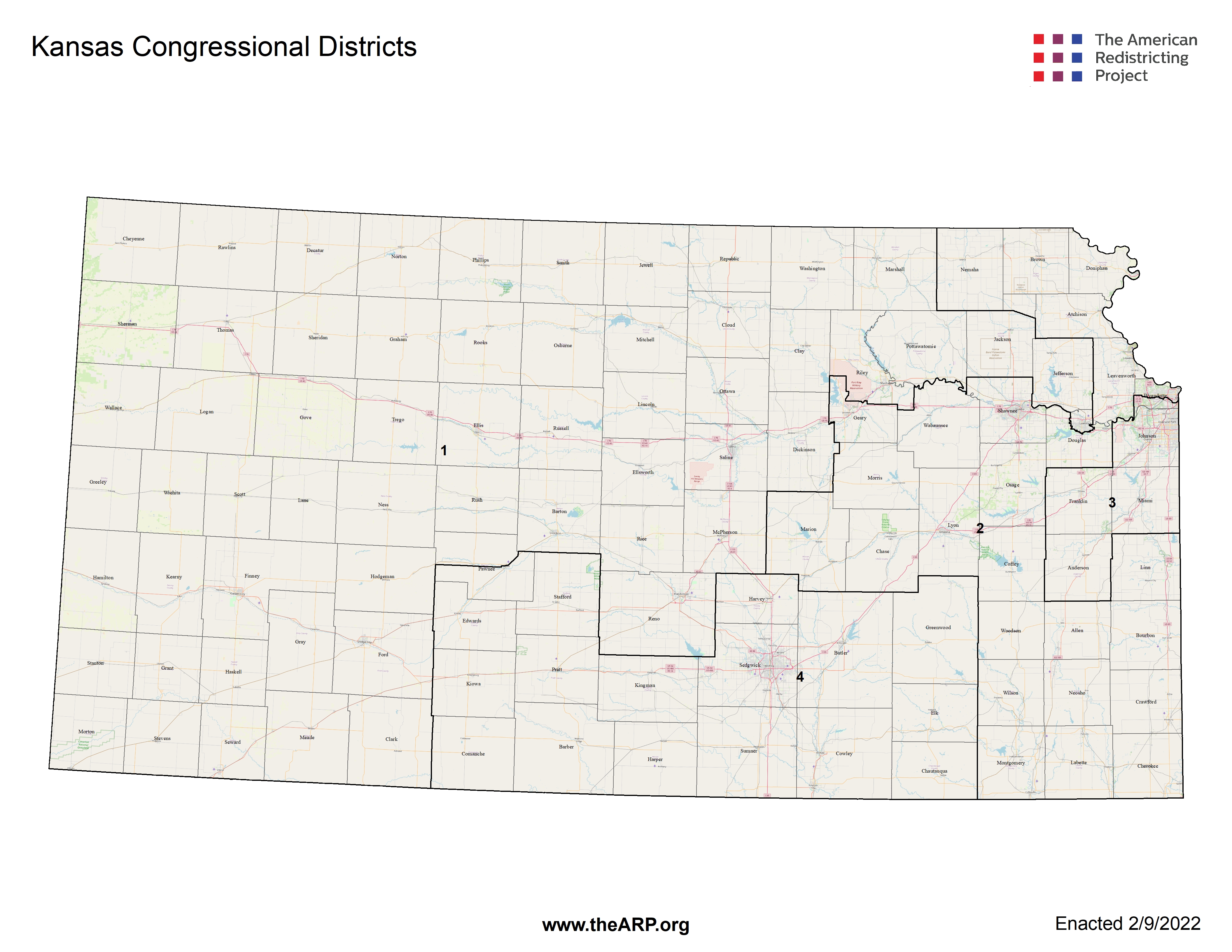
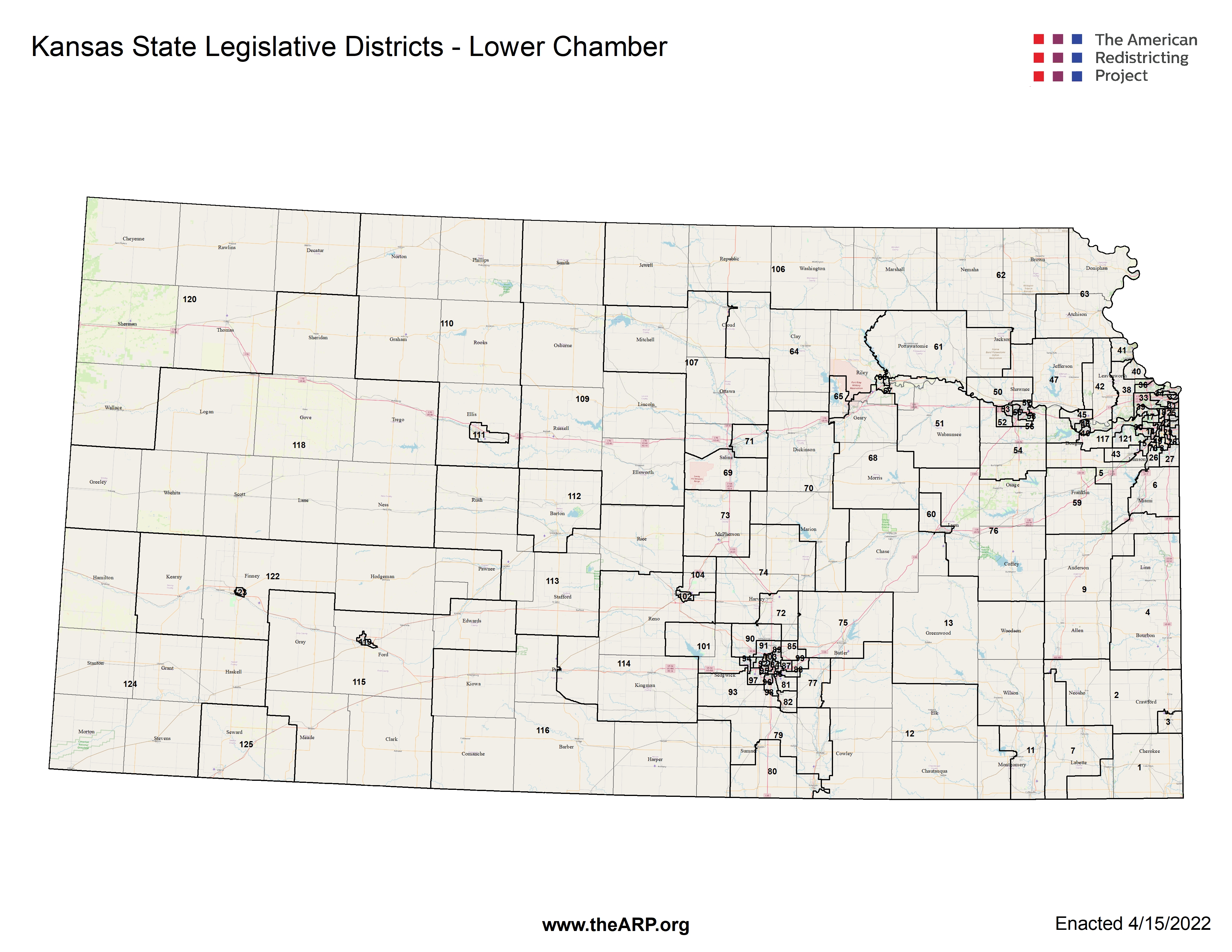
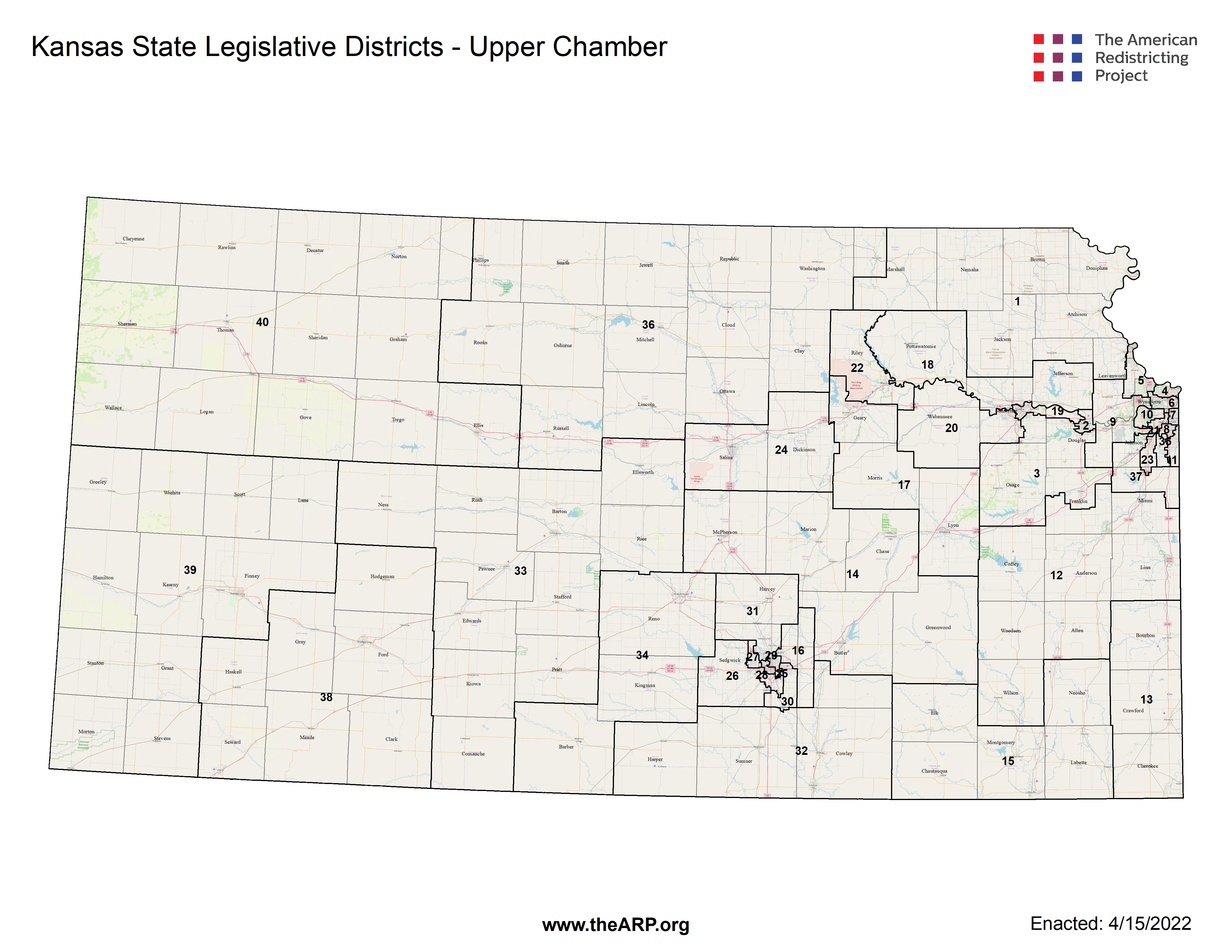
Congressional and legislative plans are drawn and enacted by the Kansas State Legislature, subject to the Governor’s veto.
Kansas’ congressional delegation remained at 4 seats following the 2020 reapportionment.
Primary Authority: Congressional and legislative plans are drawn and enacted by the Kansas State Legislature, subject to the Governor’s veto. The Legislature can override a veto with a 2/3 vote in each chamber. Republicans currently have veto-proof majorities in both chambers. [Kan. Const. art. X, § 1]
If a bill is presented to the Governor during or after session, the Governor has 10 days to sign or veto it; otherwise, it becomes law without signature. Sundays are included from these calculations.
Mapping Timeline: There is no specified deadline for congressional plans. The State Legislature must enact legislative plans by the end of its regular session in years ending in 2. Within 15 days of legislative plans’ passage, the Attorney General must petition the Kansas Supreme Court to determine their validity. The Court must render its judgment within 30 days of the petition being filed and, if it rejects a plan, the Legislature must enact a remedial plan conforming to the judgment within 15 days. [Kan. Const. art. X, § 1]
Redistricting Criteria: None.
Map Challenges: Not specified for congressional plan challenges. Legislative plans are automatically reviewed by the Kansas Supreme Court. [Kan. Const. art. X, § 1]
Types of Measures: Only the Kansas State Legislature can refer amendments to the ballot. There is no initiative or referendum process. [Kan. Const. art. XIV]
2020
2010
2000
Current districts for Kansas by chamber, shaded by the incumbent’s party.
To view past district shapefiles, see our Map Archive Page.